Monday, July 23, 2018

Why does my Pell Lake garage door stop short of the floor

The garage door opener on her Pell Lake garage works great. It glides up and down in its tracks as though a hot knife flowing through butter. There’s only one fly in the ointment; the door stops just short of closing all the way.

In the winter, snow will blow under the door. In the summer, rain washes below the door and wets the floor for a wide area in the front of the garage. You can learn to live with it – to accept that your garage door doesn’t want to close completely – but why should you?

The garage door is supposed to go all the way down when it closes. If it doesn’t, there is something wrong; there is a reason that it won’t close properly.

There are several explanations as to why your Pell Lake garage door won’t close completely. For instance …


  • You could have a problem with the safety sensors: There are safety sensors on both sides of the door. If one, or both, are damaged or worn out, you’re liable to have a problem closing your garage door completely.
  • Your safety sensors are out of alignment: When aligned properly, your garage door should go all the way down. But, maybe someone kicked one of the sensors by mistake (who would kick a safety sensor on purpose?) or something else knocked a sensor out of alignment. If this is the case, the sensors need to be realigned. 
  • Your garage door opener may require travel adjustment: Inside the opener casing, there are two knobs for adjusting the travel of the garage door. These may need a little tweaking so the garage door will go all the way down.
  • You could have a problem with mechanical parts of the garage door: A bad gear or a binding track may stop your garage door short of its intended destination all the way down to the floor.


There are all potential problems that could keep your Pell Lake garage door from closing all the way. While you may be tempted to fix the problem yourself, you may prefer to call in a professional since there is a way to adjust the travel of the garage so thieves have a harder time breaking into your garage.



Monday, July 9, 2018

Security tip of zip tie to disable garage door emergency release is a bad idea and here’s why …

garage door release zip tie
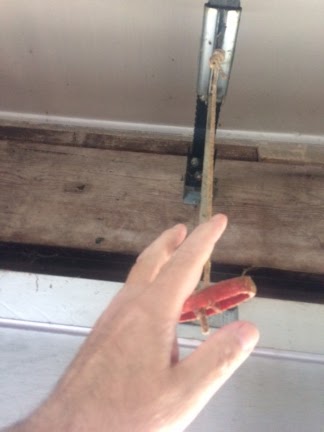
This emergency release cord is not disabled
with a zip tie. Some are in an attempt
to thwart any efforts by thieves to break
into the garage. A zip tie on the garage
door emergency release is actually a
very bad idea.
A zip tie strapped around the emergency release of a garage door opener mechanism is a tip often prescribed by those who claim they’re in the know. Yes, this can make it harder for a thief to break into your garage (fortunately, there are other ways to confront thieves) but think about the name of this device.

It’s not called the ‘convenient’ release cord. It’s not called the ‘optional’ release cord. This, usually, red cord with a handle found having down from the trolley on the drive chain, is called the ‘EMERGENCY’ release cord. This is because when you need it, you might just have an emergency.

If the power goes out, your electrically-operated garage door opener won’t work unless you have a battery backup or generator. It’s possible that, when the power went out, you would feel that your ability to get the car out of the garage is an emergency – just pulled the cord and lift the garage door by hand. But, that’s not exactly what they meant when they named this mechanism the ‘emergency’ release cord.

By emergency, the suggestion is that something or someone, valuable might be stuck under the door, such as your pet or, worse yet, one of your children. If your child is caught under the garage door you may not have time to bring a ladder over, find a cutter and cut the zip tie off your emergency release cable.

The concern is that a thief can grab the emergency release cord with a coat hanger and release the trolley from the cable. Then they’re in the garage.

So, if a zip tie is a bad idea, what can you do to ensure that your garage door is secure (doubly important if you have a garage attached to the house where they can close the garage door again and work on the door to the house unobserved)?

Below is a list of ideas to secure your garage door suggested by the International Door Association:


Monday, June 25, 2018

Is rust, or damage, causing problems for your Genoa City garage door?

garage door rust Genoa City
This Genoa City garage door track hasn't
seen lubrication in years and rust is
beginning to build up.
The tracks on either side of your garage door guide the rollers on your Genoa City garage door panels as they travel up and down. If the tracks are bent or damaged, the rollers can hang up and cause problems with operating your garage door. Rust can also cause problems.

When new, assuming it was properly installed, your garage door rolled up and down smoothly in its tracks. The process was quiet and put a minimum of stress on your garage door opener. The process occurred almost invisibly. When you wanted to open or close the garage door, you pushed the button and didn’t even think about the garage door completing the task you had assigned. But, over time, that may have changed.

Increasingly, you notice as the garage door goes up and down. It makes more noise. It may even take longer. And, in the process, it puts additional strain on the garage door opener and all the garage door’s parts.

A badly bent or damaged garage door track may cause a garage door to get stuck. If damaged badly enough, the rollers may even come out of the track. If the latter happens, the door could fall on you or your car.

Rust can also build up inside the track to the point where inefficient operation can become stalled operation.

Fixing the rails can be problematic. If they’re bent, bending them back is often a challenge. If they’re rusted, getting the rust out is difficult if not impossible.

Damaged rails occur because, 1. Something struck the rail and caused the damage, or 2. Something else caused uneven pressure in the operation of the garage door.

The first reason that you might find rust in you Genoa City garage door rails is because they were not properly lubricated. Lubrication will keep the rollers moving smoothly while also fighting off rust.

If the humidity is high around your Genoa City garage, that’s a possible cause of rust in the rails. Or, you could have a leak that is allowing water to make its way into the tracks. While fixing any leakage is imperative, either of these issues illuminates the essential need for proper lubrication in your garage door’s tracks.

Lubricating your garage door tracks, as well as other moving parts of the garage door, includes using the proper lubricants applied in the right places and in the correct level. For this service, it’s best to call in a qualified garage door technician.

Wednesday, June 6, 2018

Why won’t Tina’s Woodstock garage door open?

It’s been a long day and Tina is happy to return to her Woodstock home. Her thoughts turn to soaking in a bath before a bite to eat followed by reclining on the sofa with a good book she’s reading these days. As she pulls in the driveway, the hits the button on the remote. If she’s timed it right, she’ll pull down the driveway and into the garage without having to hit the brakes; the garage door will open just as the car passes underneath. But, something is wrong.

Tina hits the brakes hard as she realizes the garage door hasn’t opened. It hasn’t even started to open. Now, stopped in front of the closed garage door, she hits the button again. Still nothing.

There are several reasons the garage door isn’t opening. Tina doesn’t care. What she cares about is that her relaxation is on hold. She’ll probably leave the car in her Woodstock driveway go inside and call the garage door repair service. In the meantime, she’ll try to get back to her plan for relaxing. It’s not the end of the world but it has caused a little frustration just when she expected to begin unwinding.

What could be wrong with her garage door? There are several possibilities, including:

  • One of the springs that take up the weight of the garage door could have broken. The torsion springs make it possible for the garage door opener to lift and lower the garage door. Without the springs, the garage door opener is a 100-pound weakling waiting on the beach for someone to kick sand in his face.
  • Your garage door could have tracks that are out of alignment. Usually, if this is the problem, it won’t cause the garage door to not move at all, but that is a possibility.
  • The belt to the garage door opener motor could have broken or slipped off the pulley. In this case, the garage door opener may be running but it is disconnected from the drive that moves the garage door.
  • The garage door transmitter may be faulty. If the transmitter worked with your garage door before, it should work now. But, things do break and it’s possible this could happen to your transmitter. You may need to reset the codes or replace the transmitter.
  • Something could be blocking the garage door so it won’t open. It’s also possible that the garage door is locked. But, why would you lock your garage door if you want to use the garage door opener to open it?
  • There’s another possibility but it’s so simple that you might not think about it; you may need new batteries in your transmitter.


Whatever the problem with Tina’s garage door opener, there’s no reason to stress out. She can check out the batteries, make sure the door isn’t locked or blocked. If none of those are causing the problem, she can call a garage door repair service to send someone to her Woodstock home. But, first, she should soak in a bath, have something to eat and relax with her book. The garage door will wait. Well, maybe she wants to call the garage door repair service first, but, either way, she shouldn’t stress.


Monday, May 14, 2018

Is water leaking under your garage door and how can you keep the water out of your garage?

If your garage door was designed and built properly, your probably don’t have this problem. But, if that isn’t the case, you may have water leaking, or even running, under your garage door and into your garage. Water shouldn’t come into the garage.

The floor of your garage is designed to keep the water out by sloping down from the back and sides of the garage to the door. Some garages have a step up outside the garage door that serves as a damn for water that might otherwise get into the garage. Of course, there are people in McHenry and Lake County this past Spring and Summer who saw water that went much higher than any step outside their garage door.

If you’re having your garage built, before the slab is poured, it’s a very good idea to make sure that the garage floor will take water into account. Once the slab is poured, and the concrete sets, it’s too late. But, there are other things you can do.

The best way to keep water out of a garage after the garage is built, assuming the floor wasn’t designed properly in the first place, is to add something that will impede access for the water. This generally means adding a threshold kit. Threshold kits come in a variety of styles.

With some threshold kits, the garage door, when closed, will sit down on a flat strip of rubber behind a slanted, rubber water damn. Others are sloped down on either side of a thicker piece of rubber. In this case, the garage door comes down on the center of the rubber garage threshold piece.

Whatever type of threshold kit you use, it’s important that the weather stripping attached to the bottom of the garage door is in good shape so that it matches tightly with the garage threshold kit.

It’s also important to note that, if the threshold kit causes the garage door to stop higher when closing, you probably need to adjust the garage door opener and, possibly, the eyes at the bottom of the garage door opening.

Other ways to keep the water out of the garage are more labor and cost intensive. For instance, you could cut a channel in front of the door so the water is caught and flows out to the sides away from the garage door opening. You can also redo the area in front of the garage door. If you have a solid drive leading to the garage door, this is a major renovation. Even if you have a gravel drive, this is a big job. And, it may not be as easy as it seems. What you’re trying to do is to modify the topography in front of the garage door so that water flows away.


One of these latter options is the more likely solution if you’re dealing with a serious problem of water coming into the garage. Assuming that’s not the case, however, it’s important that you install the threshold kit properly. If you’re not sure you can do it right, it’s better to call in a professional from the start. It will often cost more if the professional first has to fix something that went wrong when you were trying on your own.


Thursday, April 26, 2018

How do you clean your Richmond garage door the right way?

Your standing in the kitchen looking into the backyard of your Richmond home when you notice, ‘Boy, that garage door is really dirty!’

When it was new, your garage door was the pride of the neighborhood. Well, maybe that’s going too far. At the very least, it wasn’t an embarrassment. Now, the white panels are dingy and there are streaks where water dripped through the dirt to create humiliating rivulets that seem to accentuate the cruddy lack of cleanliness.

This weekend, you’ll have to get out there and clean that baby


Have you ever cleaned your Richmond garage door before? Admittedly, it’s not on the level of rocket science. Still, it doesn’t hurt to prepare yourself so you can do the job right and, most importantly, not cause any damage.

The first point is that most garage doors are relatively solid. You don’t have to be afraid to use a little elbow grease, within reason. In other words, if you’ve been pumping iron for a few years, you may have the muscles that would be too much for the garage door.

Another thing to remember is that there are two sides to every story and there are two sides to your garage door. You many not worry about the inner side of the garage door. After all, your neighbors aren’t as likely to see that side. But, if you are a little more persnickety about things, you may also want to clean the inside of your garage door, too.

If you are going to clean the inside of the garage door, remember that some garage doors are insulated. In some cases, the inside of an insulated garage door is covered by a thin-plastic sheeting. This is where you really want to be careful not to apply too much pressure. Rip that cover, compress that insulation, and you’ll reduce the effectiveness of the insulation.

So, what should you use to clean the garage door? 


A garage door is best cleaned with a mild soap and a soft cloth. However, there are often some nooks and crannies that are hard to get at. In those cases, you may want to use a soft toothbrush. It’s recommended that, once you’ve used the toothbrush to clean the garage door that you don’t use it for brushing your teeth anymore (that’s just yucky).

Make sure you don’t scrub too hard. Even if you have some difficult to erase outlines of rivulets, too much pressure could take the paint off the garage door. If you do that, you’ll want to read our next blog about painting your Richmond garage door.


Tuesday, April 10, 2018

Time for some Springtime maintenance of your Gurnee garage door and garage door opener

It may not feel like it yet, but winter (not the official season but the actual season) in Gurnee is drawing to a close. With the advent of Springtime, you may feel inclined to start your Spring Cleaning – air things out and put them in order in preparation for the summer ahead. You may want to put garage door maintenance on your Spring Cleaning to-do list.

Winter can play havoc with your garage door and garage door opener. Snow is piled up and is pushed against the door. The cold frosts over moving and electrical parts, temperature changes cause parts to expand and contract. Winter can also cause parts to rust or corrode. The cold breaks down lubricants intended to reduce friction between parts and ease operation. All-in-all, winter is not a friend to your Gurnee garage door and garage door opener.

Garage doors can be surprisingly heavy. Thankfully, large springs are used to counter the weight and make a heavy garage door easy for a garage door opener to move up and down. If the spring breaks or loses its tension, the weight of that garage door falls heavy on the garage door opener. In other words, a bad garage door torsion spring will put a strain on a garage door opener that it is not designed to handle.

Maintenance of your Gurnee garage door and garage door opener starts with a visual inspection. Is anything broken, bent or otherwise damaged. The next step is to listen to your garage door and garage door opener. Run the garage door up and down a few times listening carefully.

In general, garage doors are quieter when they’re new. Has your garage door grown louder as it opens and closes? If so, why?

A need for lubrication is a common explanation as to why a garage door or garage door opener is louder. However, damage to any part of the garage door or garage door opener can also cause the garage door to make more noise while going up and down.

Next, watch the garage door. Does it roll up and down in its tracks smoothly? When first installed, if properly installed, a garage door will move up and down seamlessly, as though floating in its tracks. But, after a while, as it comes closer and closer to the need for maintenance, you’ll start to notice a jerky motion in the operation of your garage door.

Once the inspection of your garage door is complete, and any repairs are made, it’s time to lubricate appropriate parts. A qualified garage door technician will know best wish parts take lubrication, which don’t and what kinds of lubrication are best to use.

If you maintain your Gurnee garage door and garage door opener now, not only will it take care of you through the summer ahead, it will also last longer into the future.